Introduction:
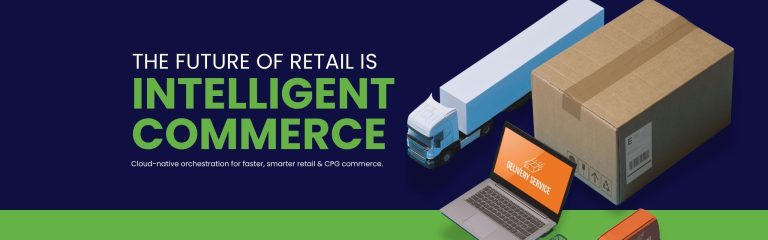
Commerce Is No Longer Won at the Storefront
Over the last decade, commerce innovation has been dominated by front-end improvements—modern storefronts, smoother UX, faster checkouts, and personalized recommendations. From a customer’s perspective, buying has never been easier.
Yet, behind the scenes, enterprise commerce tells a different story.
Despite significant investments in Commerce Cloud platforms, many organizations still struggle with fragmented systems, manual interventions, and operational bottlenecks that limit scalability and resilience. Market research consistently shows that commerce failures rarely happen due to lack of demand—but due to execution complexity during growth and peak volumes.
At Novitates, our on-ground experience across enterprise commerce transformations reinforces a clear pattern:
The future of commerce will belong to organizations that can intelligently
orchestrate every step of the customer journey—not just digitize the storefront.
This Article Explores:
- The hidden operational complexity behind modern commerce
- Where today’s commerce platforms still fall short
- Why intelligent automation is becoming the true differentiator
- How Commerce Cloud–driven orchestration will define the next decade
1. The Hidden Complexity Behind Modern Commerce
Most Commerce Cloud platforms are optimized around visible, front-end capabilities:
- Product catalogs
- Search and discovery
- Pricing and promotions
- Cart and checkout
- Storefront experiences
However, true commerce complexity begins after the “Buy” button is clicked.
Behind every transaction lies a web of operational workflows:
- Order-to-cash processes
- Inventory synchronization across locations
- Warehouse and logistics coordination
- Shipment tracking and delivery SLAs
- Returns, refunds, and reverse logistics
- ERP alignment for pricing, taxation, and compliance
- Customer service cases and dispute resolution
- Regulatory and regional compliance management
In most enterprises, these capabilities are managed in silos:
- One system for OMS
- Another for WMS
- A separate ERP
- A separate CRM
- Manual exception handling layered on top
Individually, these systems work well. Collectively, they fail.
The result is higher operational cost, slower fulfillment cycles, inconsistent customer experiences, limited real-time visibility, and increased risk during scale events such as flash sales or regional expansion.
2. Where the Commerce Cloud Market Still Falls Short
The global Commerce Cloud market is growing rapidly—projected at 16–22% CAGR and expected to exceed USD 70 billion by 2030, according to Grand View Research and Mordor Intelligence. This growth reflects widespread enterprise adoption.
Yet adoption does not equal maturity.
A. Salesforce Commerce Cloud
Strengths
- Strong storefront and UX capabilities
- High performance and uptime
- Modular and scalable front-end architecture
Limitations
- Primarily front-end focused
- Backend orchestration requires custom code or additional platforms
- ERP interactions are indirect and API-driven, not workflow-embedded
B. SAP Commerce Cloud
Strengths
- Deep product data management
- Strong alignment with ERP for catalog and pricing
- Well suited for complex B2B scenarios
Limitations
- High customization costs
- Longer implementation cycles
- Limited native workflow automation
- Heavy manual handling of operational exceptions
C. The Common Gap
Despite their strengths, both platforms expose a broader industry gap:
There is no unified execution layer that seamlessly connects ERP, logistics,
storefronts, customer service, and compliance into one intelligent, automated flow.
This lack of orchestration is where operational failures emerge—especially at scale.
3. Why Intelligent Automation Changes the Game
Research across IT services and cloud markets shows that enterprises are increasingly investing in automation, AI, and orchestration, not just digital interfaces. The global IT services market alone is projected to exceed USD 1.5 trillion, driven largely by cloud integration and automation demand (ResearchGate).
The next generation of commerce will be shaped by five foundational shifts:
AI-Driven Automation
AI is moving beyond recommendations into operations—predicting demand spikes, identifying delays, routing orders, and triggering corrective actions proactively.
Agentic Workflows
Workflows are becoming self-correcting.
When an order is delayed or inventory changes, the system resolves issues autonomously without waiting for human intervention.
End-to-End Visibility
Real-time dashboards replace batch reporting. Decision-makers gain live visibility across orders, inventory, fulfillment, and service operations.
Personalization Beyond the Front-End
Personalization now extends into operations—dynamic SLAs, context-aware routing, region-specific fulfillment logic, and customer-centric service prioritization.
ERP-Integrated Composable Storefronts
The most critical shift:
Composable storefronts can no longer operate in isolation.
The front-end must invoke an orchestration layer that embeds ERP logic directly into workflows—enabling real-time pricing, inventory, availability, and compliance validation.
This is the execution layer missing in most current Commerce Cloud architectures.
4. Where Commerce Cloud Orchestration Fits In
Modern Commerce Cloud strategies must move from platform-centric to orchestration-centric models.
An orchestration-led Commerce Cloud introduces:
A. A Unified Execution Layer
- Connects ERP, WMS, CRM, logistics, and partners
- Automates the full order lifecycle—from capture to settlement
- Handles operational exceptions intelligently
B. ERP-Embedded Composable Architecture
Unlike traditional API-only models:
- ERP logic is embedded within workflows
- Not merely queried on demand
This enables real-time inventory accuracy, pricing consistency, availability checks, and SLA enforcement.
C. AI-First Commerce Operations
Predictable AI supports:
- Intelligent order routing
- Prioritization during peak demand
- Fraud and compliance validation
- Delay prediction and proactive resolution
D. Lower Total Cost of Ownership
- Reduced custom code
- Faster deployments
- Easier scaling across regions
- Fewer fragile integrations to maintain
5. Why This Shift Matters Now
Commerce Cloud adoption is accelerating globally:
- North America holds over 40% of market share
- Asia-Pacific is the fastest-growing region
- Public cloud accounts for 70%+ of deployments, with hybrid models rising (Mordor Intelligence)
At the same time, enterprises face:
- New markets and compliance requirements
- Faster delivery expectations
- More partners and fulfillment models
Increasing operational volatility
Manual operations and fragmented workflows cannot keep pace.
Intelligent automation is no longer optional—it is foundational.
Early adopters of orchestration-led Commerce Cloud models gain:
- Faster execution
- Scalable operations
- Consistent governance
- Better customer experience
- Structural advantage over competitors.
Conclusion: From Transaction-Led to Intelligence-Led Commerce
Commerce is undergoing a fundamental shift.
Front-end innovation alone is no longer enough. As Commerce Cloud platforms mature and features converge, execution excellence becomes the true differentiator.
The future belongs to organizations that can:
- Orchestrate complex systems seamlessly
- Automate decisions intelligently
- Scale reliably without operational breakdowns
Commerce is no longer just about transactions—it is about intelligence-driven execution at scale.
At Novitates, we continue to help enterprises move toward this future by combining orchestration, automation, and AI-driven Commerce Cloud principles to build resilient, scalable commerce operations.
Join the Conversation: From Insight to Execution
The shift toward intelligent, orchestration-led Commerce Cloud models is already underway—and the enterprises that act early will define the next decade of digital commerce.
To explore this transformation in depth, Novitates is hosting an upcoming webinar where our commerce and automation experts will unpack:
- How intelligent automation is reshaping enterprise commerce operations
- Real-world patterns we see across large-scale Commerce Cloud programs
- Where orchestration delivers measurable impact across ERP, logistics, and customer experience
- Practical guidance for moving from storefront-led to intelligence-led commerce
If you are interested in commerce strategy, digital transformation, or operational scalability, this session will offer clear, actionable insights.
Register for the webinar here: https://us06web.zoom.us/webinar/register/WN_FpfPquoUQIuTg8_fPyjMsA
We look forward to continuing the conversation—and helping you turn commerce complexity into a competitive advantage.
 Skip to content