
Scaling Enterprise RPA in eCommerce — Automation That Actually Scales
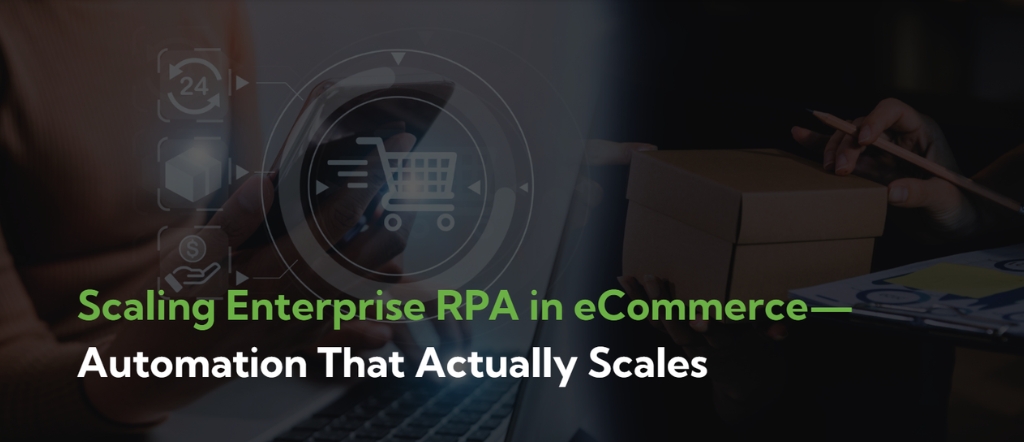
Automation is easy to deploy. Scaling it is the real challenge.
An American eCommerce multinational managing order routing, payment processing, fulfillment, and analytics deployed Pega RPA for robotic desktop automation . However, the platform struggled under the load of 4,000+ agents.
Frequent performance issues created operational instability.
The Enterprise Scaling Challenge
Large-scale RPA environments require:
- Infrastructure scalability
- Centralized bot governance
- Seamless integration with CRM and telephony platforms
- Automated agent provisioning
- Zero-disruption migration paths
The organization needed migration to a scalable robot manager platform while avoiding business losses during transition .
The Transformation Outcome
Through architectural redesign:
- Migration to a scalable Robot Manager hosted in-house
- Automated agent creation eliminating manual onboarding
- Seamless integration with Avaya and Salesforce
- Roadmap to upgraded RPA version
- Categorized and resolved BAU support issues
The measurable impact:
- Call handling time reduced to 30 seconds
- Reship processes reduced from 2.5 minutes to 30 seconds
- 80% manual effort reduction
- 95% turnaround improvement
Automation moved from tactical to strategic.
Why RPA Must Be Designed for Scale
Scaling RPA requires:
- Centralized orchestration
- Bot lifecycle governance
- Load management frameworks
- Integration-first architecture
- Continuous monitoring
Pega delivers robotic automation capability. Novitates ensures enterprise-grade design.
Novitates’ RPA Scaling Model
We architect:
- Centralized RPA governance frameworks
- Integration pipelines with CRM ecosystems
- Automated provisioning and deployment workflows
- Continuous performance optimization
Automation should not break under growth. It should accelerate it.
If your RPA environment is reaching scale limits —Novitates can help you redesign for resilience.
Ready to ship this in your enterprise?
Talk to the Novitates team about what this looks like inside your Pega or Kore.ai environment.
Book a working session
Enterprise AI. Monthly.
One email a month. Pega + Kore.ai + AWS deployment patterns. No fluff.
No spam. Unsubscribe any time.